
“Don’t say it… don’t even think about it,” documentarian John Hulme says to the students about the writing on the stone. The group stands in the woods, reading graffiti sprayed on the crumbling Route 1 Bridge. Venturing to strange locations isn’t uncommon in the digital storytelling club at Highland Park High School in New Jersey. In fact, the club is investigating an area of central New Jersey called “No Man’s Land,” rumored to be haunted, and they’re making a podcast about it. While No Man’s Land is one of many horror/true crime podcasts out there, it hits differently, skyrocketing to the top as one of my favorite horror stories that came out last year. I usually only listen to nonfiction horror podcasts, finding the fiction stuff too performative or tidy. At some point I realized that No Man’s Land has to be made-up, and the fact that I can’t tell which part is real is truly a testament to the team’s hard work. There is an intentional unpolishedness; each interview is a bit grainy, a little Zoom-glitchy, but the writing and storytelling proves that these are a talented group of young adults. This podcast successfully melds together somewhat innocuous elements – high school students, investigating hometown urban legends – with a consistent tone and well-paced storytelling into a dark tale of obsession, isolation, and the occult.
The universality of urban legends and “hometown” murders are incredibly popular in horror. It seems like pretty much every town has a cursed bridge, a haunted house, or a strange stretch of highway. While the title of the podcast refers to a very real area of Middlesex County (NJ), an unincorporated zone between Highland Park and Piscataway, No Man’s Land can be anywhere. Plus, urban legends are often used as gateway horror, drawing younger horror fans to the genre, often for the first time. No Man’s Land begins with the digital storytelling club investigating the murder of Barbara Farmer in 1963 at the historic Merriewold Castle. This real homicide is well-known in the area, and the castle is hard to miss. As the students tour the castle, one of their teachers’ friends, a psychic medium, begins to “pick up on” another death that happened nearby. The students pivot to investigating this new incident. The incident was a mass suicide in the mid ’80s and the victims were teenaged punks who called themselves The Flopheads. While interviewing former Flopheads, the students find out that a Ouija board and a possibly-demonic name may be behind the deaths. In Episode 4, Hulme and students Alicia, Jomyra, and Sandra visit the bridge where the three high schoolers took their own lives in 1985. As they read the graffiti, Hulme tells the students not to try to pronounce the name written in spray paint. This is because it is the same name that appeared on the Ouija board; the same name that, when spoken, may cause people to break their own fingers and commit atrocities, even kill.
According to the No Man’s Land website, many of the students who worked on season 1 of No Man’s Land, including hosts Marc Ramrekha and Will Schwartz, graduated from Highland Park High School and continued their studies at nearby Rutgers University while continuing to work on the pod. But originally, the podcast was produced and created by digital storytelling club at Highland Park High School, making the investigation into the strange deaths of other Highland Park High School students even more chilling. Numerous times during interviews, adults refuse to talk to the students about No Man’s Land, citing various reasons. In Episode 5, a Rutgers professor tells Ramrekha and Schwartz that “amateurs” shouldn’t be investigating this subject. Ramrekha and Hulme are annoyed at the professor’s choice of the word “amateurs,” implying that it was used simply because the students were in their late teens at the time. Schwartz disagrees, thinking that it is “generous” to be called amateurs, and Hulme asks “what is a ‘professional,’ though? …I think that you guys have both done enough of this to know how to respect people during an interview, to take care of their emotions if you’re talking about something personal.” When young people create art, adults can have a tendency to be dismissive and condescending. Not only do Hulme and the students push back on this, but the podcast seems to challenge it by dragging the students deeper into its dark subject matter. In Episode 3, Hulme and the hosts interview Dave Rock, a former Flophead and the only witness to what happened under the bridge. At first, he’s reluctant to do the interview. Hulme tells Ramrekha and Schwartz privately “get him talking about his childhood,” and sure enough, Rock begins to open up. The result is intense; this is when the podcast really kicks off, and when No Man’s Land becomes a bulletin board with connecting tacks and strings, trying to piece together the forgotten stories of local history. A similar thing happens during the interview with Willie Claws in Episode 9. Hometown stories and childhood memories get people talking, and young people are actually the perfect narrators to this story. It feels very genuine (again, fact or fiction?) to guide the adults into reimagining their youth, by talking to students who are living similar lives decades later.
From the Satanic Panic to the self-aware slashers of the 1990’s, we are seeing a new trend in horror: fictionalized true crime. With the new release by John Darnielle (Devil House) and Richard Chizmar’s 2021 book Chasing the Boogeyman, plus the Manson family rewrite in Quentin Tarantino’s Once Upon a Time… in Hollywood, it seems like true crime and horror fiction are going hand in hand these days. No Man’s Land does this brilliantly, blending together real stories (such as some of Kristen Rogers Anderson’s stories about living in No Man’s Land, a story that I’d heard before on her and her brother’s podcast Guide to the Unknown) with what I call “creative embellishments.” They even have video episodes on their website, photos of newspaper clippings, and a No Man’s Land Reddit with posts varying from a link to a Flophead playlist and an AMA from someone who was friends with the kids who died under the bridge. All of this supplementary material adds to the world-building, and it’s masterfully consistent across platforms. Even in the podcast, it’s hard to believe that this story was being told over the course of years, bisected neatly in the middle by the COVID-19 pandemic. The podcast itself is paced well, following one lead per terse episode, with near-seamless editing. No Man’s Land isn’t just a good story; it’s technically impressive as well.
No Man’s Land melds the fact and fiction, and while it’s scarier to believe that most of it is fact, there’s most likely some creative nonfiction going on behind the scenes. During a great deal of my listening to the pod, I’m a little embarrassed to admit that I thought it was real. Even the parts that I thought were a little “out there” (basically anything having to do with medical records, hospital trips or patient interviews), I tried to justify the reality to myself. But at the end of the day, does it even matter if it is real or fake? Any which way, it is fucking terrifying. I binged it on my birthday, walking downtown in broad daylight during a snowstorm, looking for party decorations. I’ve never been more scared.
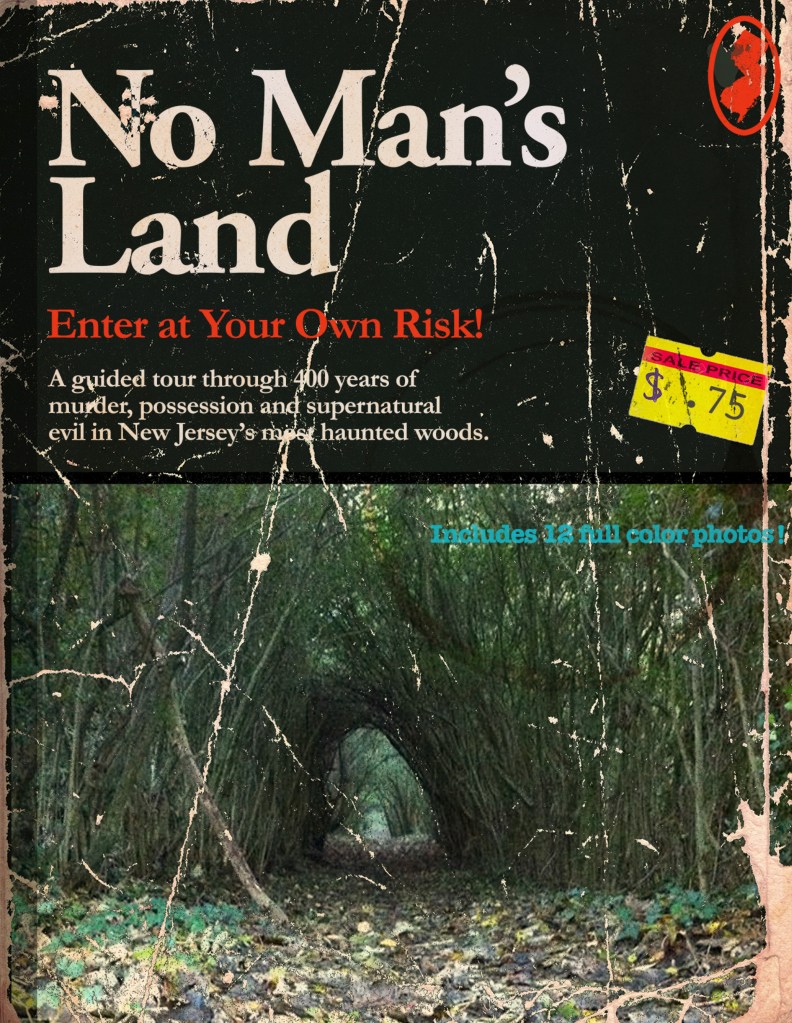
Listen to No Man’s Land here. Special thanks to John Hulme for providing the cover photo.


Leave a Reply