Have you ever heard “the book is better than the movie?” Horror movies based on books often– but not always– come out in the height of the book’s popularity. My favorite example is Stephen King’s debut Carrie, which was released in 1974 and the film adaptation was created in 1976. The Bad Seed by William March also was published in 1954 and a hit movie was made in 1956. Those two books are not on this list, nor are any other Stephen King books (we could write a whole other post about him), but I tried to include movies that do something interesting with the original text. In my opinion, book-to-film adaptation is a form of translation and below are some excellent examples of how to do it right (relatively spoiler-free!).
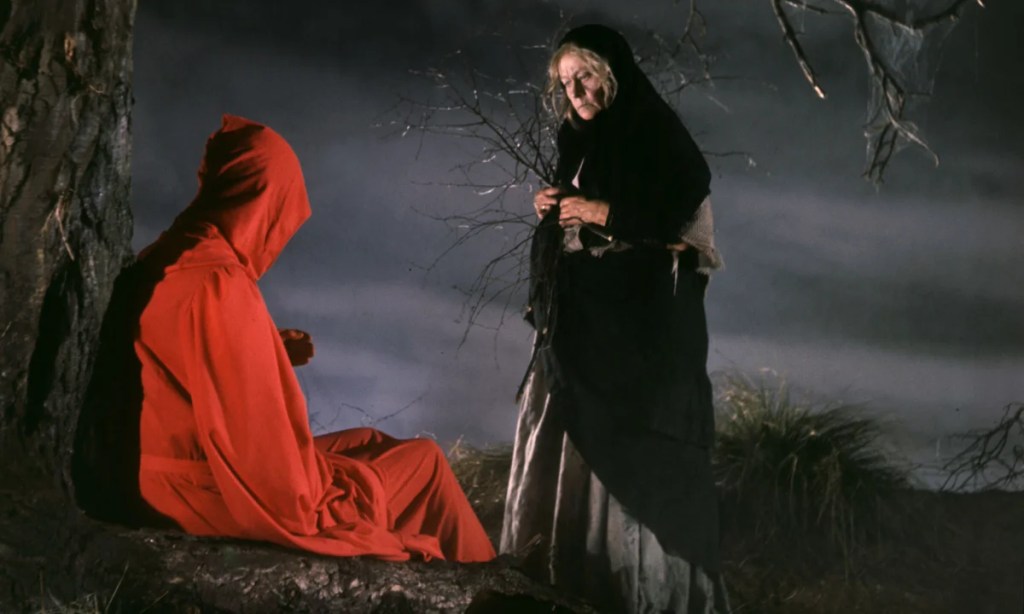
Corman’s Poe Cycle (1960-1964), based on the stories of Edgar Allan Poe
The first one on this list is a bit of a cop-out since it is including multiple movies adapted from multiple stories. Roger Corman is the king of schlocky B-horror of the 50s and 60s. His most notable achievement (in my opinion) is the highly entertaining Edgar Allan Poe series featuring horror king Vincent Price. Called the “Corman Poe Cycle,” some of the best films are “The Pit & the Pendulum” and “The Masque of the Red Death.” Corman is an expert penny-pincher and decided to adapt Poe’s stories because they were copyright-free and he could reuse sets. In return, he introduced a whole slew of young people to the works of Edgar Allan Poe!
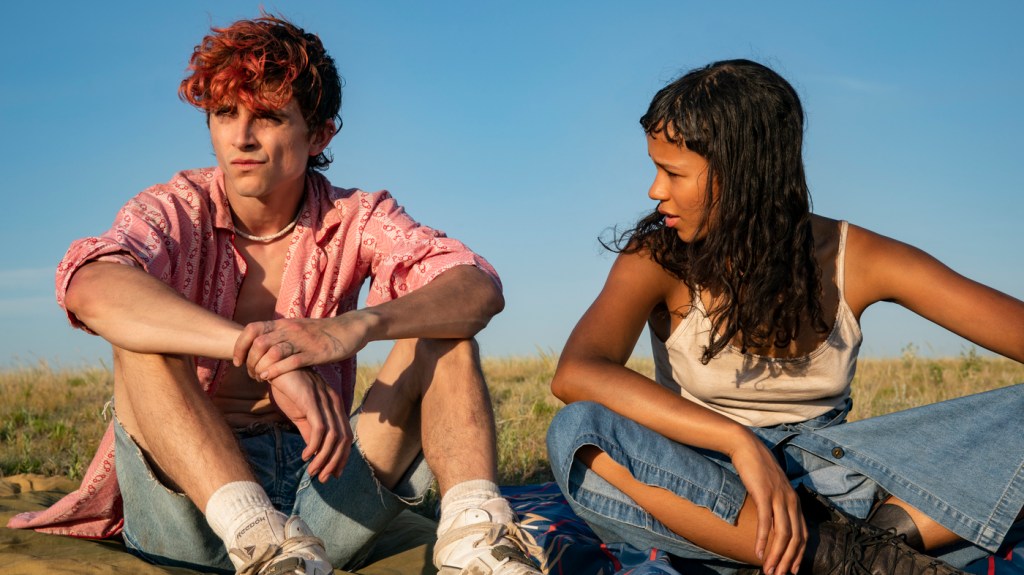
Bones and All (2022), based on “Bones & All” by Camille DeAngelis
Camille DeAngelis’ young adult book Bones & All is a cannibalistic love story, adapted for the screen by Luca Guadagnino. Teenager Maren (played by Taylor Russell in the film) discovers she is a cannibal, flees her hometown and meets Lee (Timothee Chalamet), another young cannibal drifter. Together they find love and acceptance as they travel across the Midwest. The family dynamics and the theme of cannibalism are different in the book, altered for the movie perhaps to add more horror and suspense elements to the plot. The book– firmly a coming of age story with horror elements– explores Maren’s life as a solo explorer after crossing paths with Lee, as well.
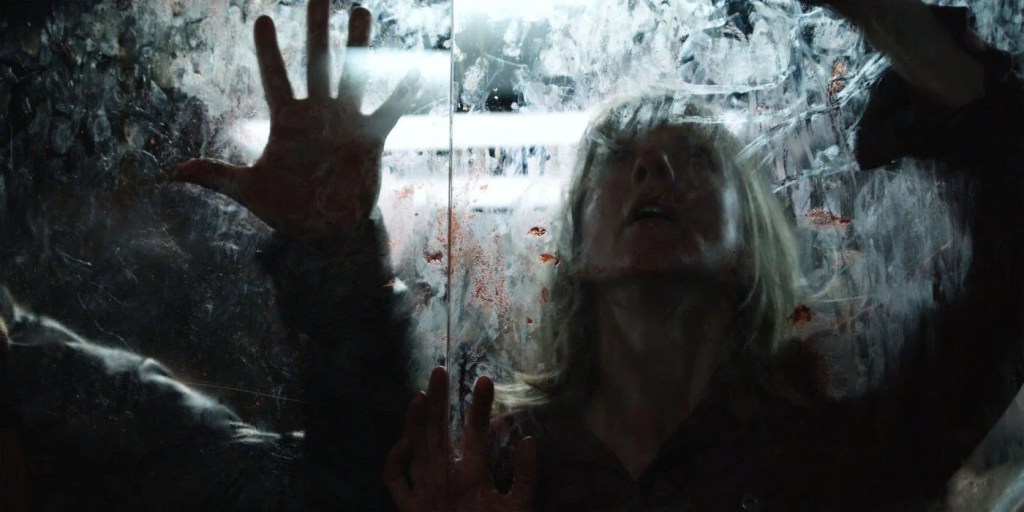
Pontypool (2008), based on “Pontypool Changes Everything” by Tony Burgess
Taking place in a radio station, one of the shock-jock radio announcers must cover the building chaos during a rash of unexpected violence. It’s kind of like “Arrival” with zombies as it covers themes such as the power of language and the danger of us-versus-them. When the movie “Pontypool” was released, a radioplay version (a lost artform) was also created using dialogue from the film. In the book, there are multiple narrators, while the film and radioplay follow one or two characters throughout the course of the narrative.
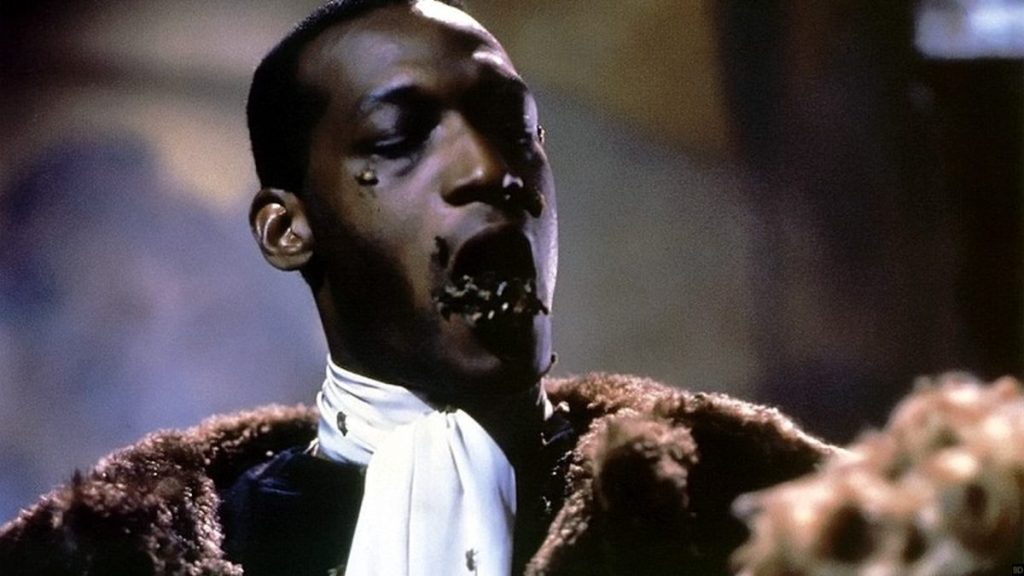
Candyman (1991)- “The Forbidden” by Clive Barker
It’s no secret that Candyman is one of my favorite movies of all time, in a large part due to setting it in Chicago and putting poor people at the center of the story. However, the short story “The Forbidden” by British author Clive Barker is not set in a predominantly Black housing complex on Chicago’s near north side. It did, however, deal with class relations, set on disenfranchised Spector Street, without naming race specifically (as many white authors did not, at the time). In both stories, a white woman named Helen is researching graffiti in a poor urban locale, when she begins hearing legends of a specter named Candyman. Barker’s story is less about Candyman himself and more about the hysteria in which he creates. Make sure to catch Nia DaCosta’s 2021 Candyman reboot as well.

The Ring (2002), based on “Ring” by Koji Suzuki
When I read Suzuki’s Ring, I was shocked and horrified at how misogynistic and offensive it was to me. I’d seen the movies first, but there were a few changes in the book that stood out: the main character was a man (sigh) and Sadako was intersex. The movie The Ring follows Naomi Watts’ character, a journalist who is personally invested in finding out the source of this cursed videotape not only because she has watched it but because her son also viewed it accidentally. It feels like a story of unconditional love from a parent to a child, something Sadako desperately needs. But the damage is done and ultimately, even love does not save the day. This is kind of a complex and interesting queer reading, if we view the film with the knowledge that Sadako is intersex.

Frankenstein (1931), based on “Frankenstein” by Mary Shelley
Ok, so maybe it’s not the movie that catapulted the Universal Monsters to popularity (that would be 1931’s Dracula), but it was one of the first movies that showed a villain to have a complicated and sympathetic side. I really struggled on which one to put on the list, but I have to say that for me, James Whale’s Frankenstein is more influential about how the horror genre is viewed and received. The complex villain narrative has survived the test of time in both literature and film. Plus, Mary Shelley ‘invented’ the science fiction/ horror genre through her book, which is still a thriving genre pair to this day!

Rosemary’s Baby (1968), based on “Rosemary’s Baby” by Ira Levin
Like Stephen King’s Carrie, Rosemary’s Baby was a popular hit as a novel and immediately optioned as a movie. According to William Castle’s autography, the production of “Rosemary’s Baby” (1968) was fraught. It seemed like what Castle thought would be a popcorn movie turned into a arthouse masterpiece and one of the best horror movies ever made. The script is the text of the book, near verbatim, but Rosemary has a lot more autonomy in the book imo. To me, the book is way better than the movie.

American Psycho (2000), based on “American Psycho” by Bret Easton Ellis
I will admit, I tried to read American Psycho by Bret Easton Ellis but I was much more interested in the film directed by Mary Herron. American Psycho follows Patrick Bateman, a Wall Street investment banker who thinks about three things: material goods, being perceived as wealthy, and serial killing. To me, this narrative was so much more nuanced and complicated directed by a woman. In Ellis’ book, you don’t really know if the consumer is supposed to identify with Bateman or hate him. In Herron’s film, it’s kind of both: audiences who despite bros like this will revel in the satire of it all, while Christian Bale’s Bateman is still attractive to some.

Let the Right One In (2008), based on “Let the Right One In” by John Ajvide Lindqvist
So, much like the other books and movies on this list, there are a few remakes of Let the Right One In and also a play! But let’s talk about the Swedish movie and book, shall we? The film is marketed as a young horror love story between a boy Oskar and a vampire girl Eli. However, in the book, the psychology of the side characters are explored more, notably Eli’s “uncle” Haxan is a pedophile, which is just hinted at in the movie. Also in the book, there is a queer element as Eli was assigned male at birth and had her genitalia removed and now presents as gender fluid. The scenes of bullying are the scariest parts of the book and movie both.

The Exorcist (1973), based on “The Exorcist” by William Peter Blatty
I read The Exorcist by William Peter Blatty before I saw the 1973 movie, and wow. If you have somehow (like me, until a few years ago) avoided both until now, I recommend this approach. The book is fantastically written, with very lovable relatable characters especially in Chris’ portrayal. I read somewhere that this was Blatty’s first draft, and I find that really hard to believe since it’s just so freakin’ good. Blatty also wrote the screenplay for the movie, and William Freidkin’s direction as a “literary” touch. Ellen Burstyn is a little older than how I imagined Chris was in the book, but otherwise the casting is spot on. I’m rewarding this adaptation will the #1 spot because both book and film are 5 stars and Blatty wrote both; I think authors should be given more agency to write the screenplays of their novels.
What’s your favorite book-to-movie horror adaptation?
 Chloe's Not Scared
Leave a comment